


What Wood Lights Fastest for an Easy Fire?

A cold fire pit, hungry charcoal, and a stack of wood that will not catch can ruin a perfectly good evening fast. So, what wood lights fastest? The honest answer is dry, small pieces of wood with plenty of exposed edges - and the species matters less than most people think.
If you want flames quickly, do not start by hunting for one magic log. Start with wood that is dry enough to burn, split small enough to catch, and arranged so a match can reach it. Get those three things right and you can spend less time crouched over smoke and more time around a real fire.
What wood lights fastest in real-world conditions?
Dry softwood generally lights faster than dense hardwood when both are split to the same size. Pine, cedar, spruce, and fir have an open grain and lower density than woods such as oak, hickory, and maple. That means heat can move through a small piece more quickly, allowing it to catch sooner.
But species is only one part of the story. A pencil-thin piece of dry oak will usually light before a damp, fist-size piece of pine. Water is the real fire killer. Before wood can burn, the heat from your match or starter has to drive off that moisture. If the wood hisses, steams, or produces thick white smoke without building a flame, it is spending its energy drying out instead of burning.
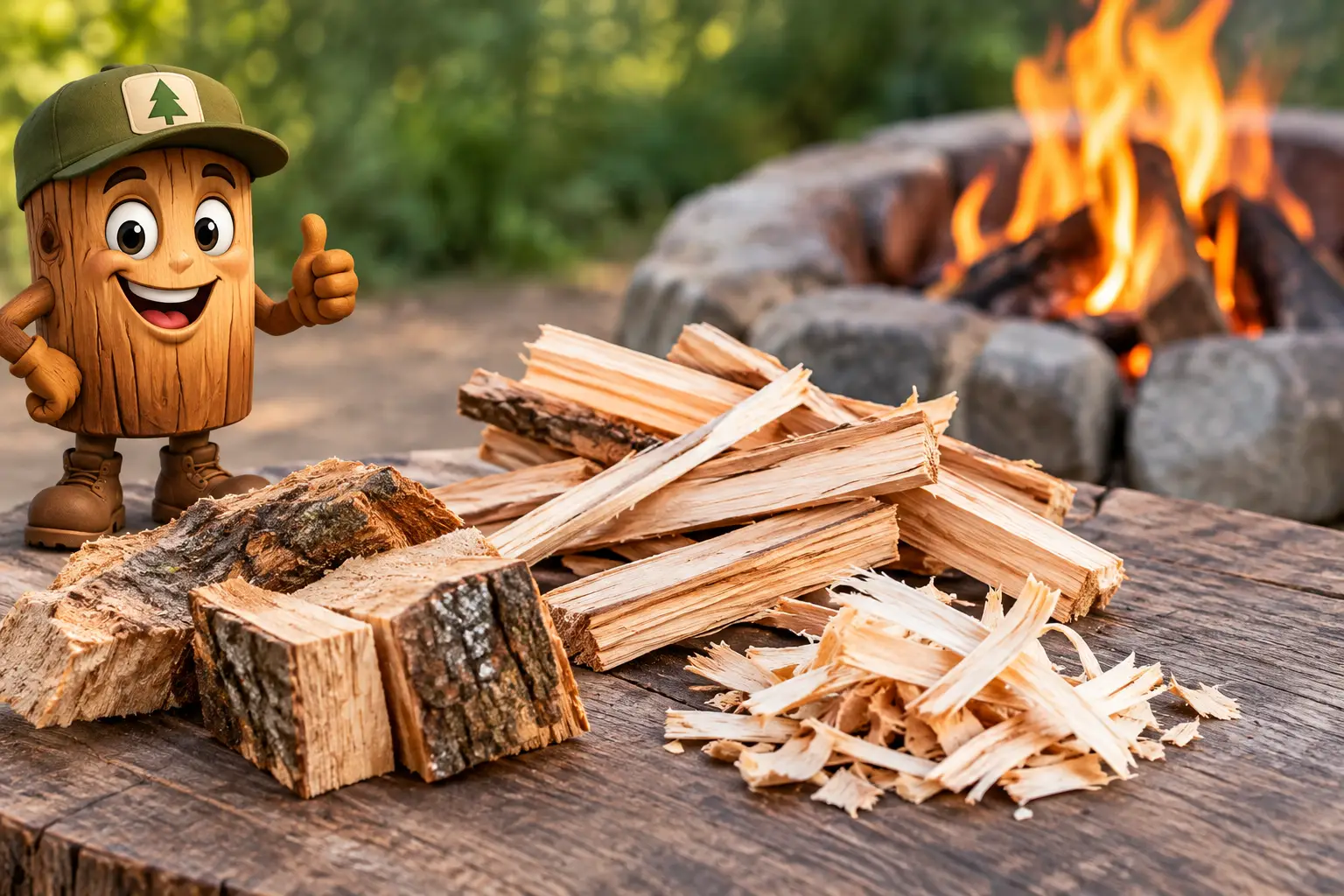
For a fast start, reach for dry softwood kindling or dry wood fiber that has been processed into small, easy-to-light pieces. Save your bigger, denser hardwood splits for later. They may be slower to catch, but they provide the long, steady burn that keeps a fireplace, wood stove, or campfire going.
The fastest-lighting wood has three things going for it
Fast ignition is not about a fancy trick. It comes down to moisture, size, and airflow.
It is truly dry
Seasoned firewood should feel light for its size and show cracks at the ends. Fresh-cut wood often looks darker and feels heavier because it is still holding a lot of water. Even good firewood can become hard to light after it has sat uncovered through rain, snow, or humid weather.
Keep your kindling and fire-starting material dry before anything else. Store it off the ground and protected from rain, but allow air to move around it. A sealed, wet pile does not improve with time. A dry supply near the fireplace, in the garage, or in a covered camp bin turns fire night into a simple plan instead of a damp-wood gamble.
It has lots of surface area
A full-size log is built for burn time, not quick ignition. Small splits, thin shavings, and chunky pieces with rough, broken surfaces catch faster because more wood is exposed to heat and oxygen.
Think of your fire in stages. The smallest material takes the flame first. That flame heats medium pieces. The medium pieces then create enough heat to ignite the larger logs or charcoal. Trying to light the final stage first is why so many fires turn into a smoky pile of frustration.
It can breathe
Fire needs oxygen as much as it needs fuel. Packing kindling tightly into a solid mound may look tidy, but it starves the flame. Leave small gaps between pieces. Build upward, not outward, so warm air can rise through the stack and pull fresh air in from below.
This matters even more in a charcoal chimney. A firestarter needs room beneath the charcoal so the flame can travel upward. If ash, old coals, or tightly packed fuel block the airflow, ignition slows down no matter how dry your starter is.
Softwood versus hardwood: which should you use?
Use both, but give them different jobs. Softwoods are often the quick-start crew. Their lighter structure helps them catch readily when they are dry and split small. Hardwoods are the long-haul crew. They usually burn longer and make dependable coals once the fire is established.
Cedar and pine kindling can be handy for getting a wood fire moving, though they burn quickly and should not be your only fuel for a long evening. Oak, maple, ash, and hickory are better choices when you want lasting heat or a steady bed of coals for cooking.
There is one catch: not every piece from the same tree behaves the same way. A dry, weather-protected hardwood split can outperform neglected softwood. Do not judge firewood by the label alone. Pick it up, look at it, and pay attention to how it has been stored.
Why stump wood can start a fire differently
Not all wood comes from a straight trunk split into ordinary kindling. Root wood from recycled stumps has a dense, tangled structure, with fibers that grew under the ground to anchor the tree. When that material is properly prepared into firestarter pieces, it can offer a powerful combination: easy match-lighting ignition with a hotter, longer-lasting flame than flimsy paper-based options.
That is the idea behind StumpChunks. The pieces are made from 100% natural recycled tree stumps, with no chemical additives, no paper to chase around the yard, and no lighter fluid smell around your food or fire pit. Put a few pieces under dry wood or charcoal, light them with a match, and let the flame do the work.
The lesson is bigger than one product: the fastest way to light a fire is often to use a purpose-made natural starter beneath the fuel you actually want to burn. Your main logs do not need to be quick-lighting if the layer below them gets hot fast and burns long enough to transfer that heat.
Build a fire that catches without babysitting
For a fireplace, wood stove, or fire pit, begin with a clear base and an open path for air. Place your natural firestarter at the bottom. Set a loose layer of small, dry kindling above it, then add a few medium splits. Keep the biggest logs out until the smaller wood is burning with confidence.
For charcoal, place the starter beneath a chimney or make a small pocket under a mound of briquettes or lump charcoal. Light it with a match and give it a moment. Do not keep rearranging the charcoal every 20 seconds. A good starter needs time to establish a flame and send heat upward.
Once the fire is burning, add fuel gradually. Dropping a heavy, cold log onto a young flame can crush the airflow and cool the whole setup. Build heat first, then build size.
Common reasons wood will not light
When a fire refuses to catch, most people add more paper. That usually creates a burst of ash, more smoke, and not much more heat. Solve the actual problem instead.
Wet wood needs replacing, not persuading. Oversized splits need smaller material beneath them. A packed fire needs gaps. Wind can help with airflow, but a strong crosswind can also blow heat away from the kindling, so use a safe windbreak or reposition your setup if conditions allow.
Avoid gasoline, solvents, and other liquid accelerants. They can flare unpredictably, leave unpleasant odors, and make a routine fire needlessly dangerous. A dry, natural starter and properly arranged fuel are the cleaner answer.
The better question to ask before you strike the match
Instead of asking only which species burns fastest, ask whether your fire has a dry, small, breathable first layer. That is what turns one match into steady flame. Keep quick-lighting material on hand, protect it from moisture, and let larger wood do what it does best: make the night last.
Then put your feet up, pour something cold, and enjoy the part of the fire that matters - the warmth, the food, and the people gathered around it.


Comments