


How to Stack Wood Stove Fuel for Better Fires

A wood stove can be packed with good firewood and still give you a smoky, sluggish start if the stack is wrong. If you searched how to stack wood stove fuel, the answer is simple: build in layers, leave room for air, and use the right-size wood at the right time. A fire needs more than fuel. It needs a clear path for oxygen to move through the stack.
Start With Dry Wood and an Empty Firebox
Before you build anything, clear excess ash from the stove. Leave a thin bed - about an inch is usually plenty - because it helps insulate the firebox and holds heat. Too much ash crowds the wood, chokes airflow, and makes cleanup a mess.
Use properly seasoned firewood. Dry splits light faster, burn hotter, and produce less smoke than wet wood. If a log feels unusually heavy, looks freshly cut, or hisses and bubbles at the ends when it burns, it is carrying too much moisture. Set it aside for drying and grab better wood.
Split size matters, too. Small splits are for getting the fire established. Medium splits carry the fire once it is burning. Large splits are for a longer, steadier burn after you have a solid bed of glowing coals. Trying to light a large round first is a good way to spend the next twenty minutes poking at a fire that does not want to cooperate.
Open the stove's air control fully before lighting. If your stove has a bypass damper, open that as well according to the manufacturer's instructions. You want the chimney pulling hard from the start, not fighting through a tight pile of wood.
How to Stack Wood Stove Fuel for a Cold Start
For most modern wood stoves, a top-down stack is the cleanest, easiest way to start a fire. Big wood goes on the bottom, smaller fuel goes above it, and the flame works its way down. This lets the hottest part of the fire warm the flue early while the larger logs below turn into a lasting coal bed.
Lay two or three medium-to-large splits across the bottom of the firebox, with a little space between each piece. Do not jam them against the stove walls or pack every gap. Air needs channels to travel through the load.
Place two or three smaller splits across the first layer in the opposite direction. This crisscross pattern creates a stable stack with open pockets for airflow. It also keeps the upper pieces from settling flat and smothering the fire below.
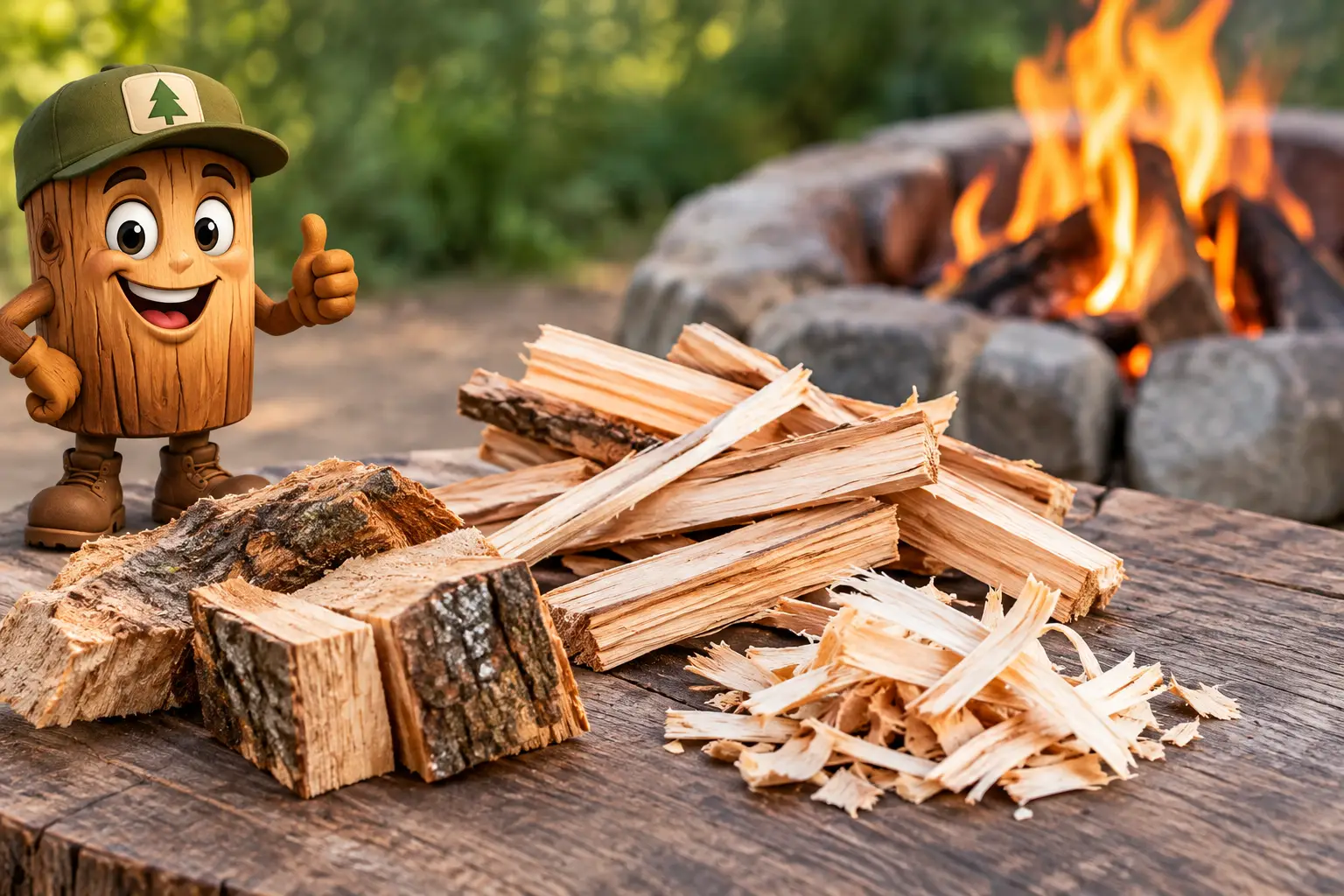
On top, add a loose layer of small dry splits. Then place your natural firestarter at the top center, where it can light the small wood first. A product like StumpChunks is made from recycled stump wood and lights with a match, so there is no need to wad up newspaper or add chemical-smelling starters. Light it, close the stove door, and let the air control do its job.
The goal is not a towering pile. Keep the stack low enough that flames have room to move without licking the stove's baffle or getting pressed against the glass. Your owner's manual sets the real limit for firebox loading, so follow it over any general rule.
Give the Fire Room to Breathe
A tight stack may look efficient, but it often burns poorly. Wood touches wood, the fire loses its air gaps, and smoke builds before the chimney is hot enough to pull it away. The best stove stack has deliberate empty spaces between the pieces.
Think of your firewood like a campfire built inside a steel box. You want enough wood to create heat, but not so much that you block the draft. Leave a little clearance around the sides and front of the load. Avoid laying every split in the same direction, especially when starting from cold.
If smoke spills into the room when you open the door, the problem may be a weak draft rather than your stack. Cold outdoor temperatures, a cold chimney, damp wood, or a house that is tightly sealed can all slow the pull. Open the air control, crack the door only as directed by your stove manufacturer, and give the fire a moment to establish before adding more wood.
Reload a Wood Stove Without Killing the Coal Bed
Once you have a bed of red coals, you do not need to rebuild a full starter stack. Rake the coals toward the front of the firebox, where incoming air usually enters. Place one or two medium splits on or just behind those coals, leaving room between them. For a quick burst of heat, use smaller splits and open the air control wider until the new wood is burning strongly.
For a longer burn, use larger splits after the fire is established. Place them side by side with a narrow gap rather than dropping them into a solid wall of wood. The exact direction depends on the shape of your firebox. Some stoves load best front to back, while others have more room when logs run side to side. Use the orientation that lets you close the door easily and maintain air space around the fuel.
Do not turn the air control down the moment you reload. Give the new pieces time to char and catch with a visible flame. Closing the air too early can create a smoldering fire, darken the glass, and send more smoke and buildup into the flue. Once the wood is burning well, reduce the air gradually to the setting that holds comfortable heat without lazy, smoky flames.
Avoid These Stacking Mistakes
The fastest way to frustrate yourself is to treat a wood stove like a storage bin. Overloading the firebox, using oversized pieces at startup, or burying your starter under heavy logs all slow ignition. A stove fire should be built with intention, not crammed together because it is cold outside.
Avoid using glossy paper, cardboard, trash, treated lumber, painted wood, or construction scraps. They can release unpleasant fumes, leave residue, and create problems for your stove and chimney. Clean, dry, untreated firewood and an all-natural starter are the better combination.
Also resist the urge to keep opening the door to check on the fire. Every opening disrupts the stove's draft and pulls warm room air into the firebox. Light the stack, close the door, and let the flame build. You have better things to do than babysit kindling.
Match the Stack to the Heat You Need
There is no single perfect load for every day. On a mild afternoon, a smaller stack of medium splits gives you a comfortable fire without overheating the room. During a hard New Hampshire cold snap or any long winter night, a larger load of seasoned hardwood can provide steady heat after the stove and chimney are fully warm.
If you are learning a new stove, start smaller. Watch how quickly it responds, how the flames behave, and how much heat reaches the room. Every stove drafts a little differently, and every woodpile has its own mix of species, moisture levels, and split sizes. A few fires will teach you more than forcing one overloaded burn.
Keep a small basket of dry starter splits near the stove, with medium and large pieces close by. That simple setup makes it easy to build the right stack instead of settling for whatever log is on top of the pile. When the wood is dry, the air is open, and the stack has breathing room, a warm fire is not complicated. Strike the match, let the stove come alive, then put your feet up and enjoy the heat.


Comments